
The approach to alcohol treatment is evolving. For a long time, alcohol withdrawal was primarily associated with willpower, medication, psychological counseling, or support groups. Today, research is increasingly focusing on non-invasive stimulation methods that can complement comprehensive treatment. The REDSTIM trial, recently presented by Addict’Aide, illustrates this trend: it explores the potential of non-invasive brain stimulation in alcohol use disorder, particularly to reduce the number of days of heavy drinking and better manage cravings—those intense and sometimes difficult-to-control urges.
When Alcohol Becomes a Habit That’s Hard to Control
Alcohol use doesn’t become a problem overnight. It often develops gradually: a drink to unwind, a recurring aperitif, social drinking that becomes more frequent, and then difficulty cutting back despite fatigue, sleep disturbances, family tensions, or health impacts. In France, official guidelines recommend not exceeding ten standard drinks per week, not consuming more than two drinks per day, and setting aside days without alcohol.
But these guidelines aren’t always enough. Some people know they’re drinking too much and want to cut back, but they struggle with powerful habits. That’s where personalized support can make a difference. The French National Health Insurance also reminds us that if you’re struggling with alcohol, your primary care physician can develop a treatment plan with appropriate professionals, especially when an addiction has taken hold.
What the REDSTIM trial shows
The REDSTIM trial focuses on transcranial direct current stimulation, or tDCS. This technique involves applying a low-intensity electrical current using electrodes placed on the scalp. In the study cited by Addict’Aide, 337 adults with an alcohol use disorder were divided into a group receiving active stimulation and a placebo group. The protocol consisted of ten sessions over five days, followed by a 24-week follow-up period. The results show a greater reduction in the number of days of heavy drinking in the active group, with an effect described as small to moderate.
This point is important: this is not a miracle cure, nor is it a stand-alone treatment that would replace medical care. Rather, the value of this type of research lies in demonstrating that noninvasive stimulation could become a complementary tool within a broader treatment approach. Addiction is a complex phenomenon linked to habits, stress, the reward system, emotions, social context, and sometimes long-standing emotional distress. Inserm defines addictions as brain disorders associated with dependence and harmful consequences, involving mechanisms that contribute to the maintenance of addiction and relapse.
MyLaserTabac: A Gentle Approach to Managing Alcohol Use
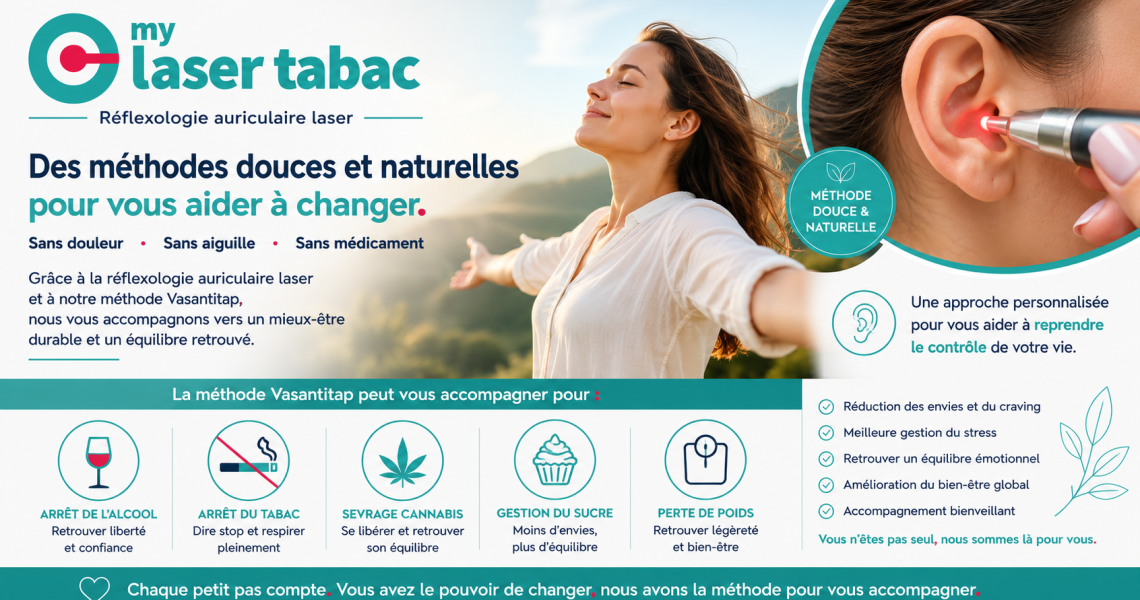
As part of this approach, MyLaserTabac offers non-invasive support. The company specializes in laser auricular reflexology, using a low-power laser to help its clients quit smoking, quit drinking, manage blood sugar, lose weight, and wean themselves off cannabis.
Our approach does not involve promising an immediate cure. Rather, it aims to support a person through a process of change, at a time when they wish to regain control over their cravings, their habitual behaviors, and their daily life. When it comes to alcohol, the session can be viewed as a complementary form of support, particularly for people who experience a regular urge to drink, or who associate alcohol with stress, reward, relaxation, or certain social habits.
Laser auricular reflexology involves stimulating specific areas of the ear using a low-intensity laser. This method is non-invasive, needle-free, and is intended for people seeking a more comfortable complementary therapy. It can be integrated into a comprehensive approach that includes lifestyle advice, motivational support, medical follow-up if necessary, reducing risk factors, better stress management, and preparation for times of vulnerability.
Vasantitap: a method that can be used for alcohol, tobacco, cannabis, and sugar
At MyLaserTabac, we also use the Vasantitap method to address addictive behaviors or patterns of repeated use. This method can be applied to alcohol, as well as tobacco, cannabis, and sugar. The goal remains the same: to help the person overcome cravings, reduce automatic behaviors, and establish new habits in their daily life.
For tobacco, support often aims to break the link between cigarettes and habits such as coffee, driving, taking a break, stress, using the phone, or the end of a meal. For cannabis, the focus frequently centers on rituals, falling asleep, anxiety, or the substance’s role in social life. For sugar, the issue is often different, but the mechanisms of craving, emotional compensation, and loss of control can overlap. In each case, the approach must be tailored to the person’s profile, history, motivation, and goals.
A responsible and complementary approach
It is essential to remember that an alcohol use disorder may require medical supervision, especially in cases of heavy drinking, physical dependence, tremors, severe anxiety, a history of complicated withdrawal, or associated medical conditions. A gentle approach should never delay seeking medical care when it is necessary. However, it can serve as a valuable support for individuals who wish to receive guidance within a structured, reassuring, and personalized setting.
The current interest in noninvasive interventions highlights one thing: addiction treatment is evolving toward more comprehensive, more individualized solutions that are better tailored to people’s realities. Alcohol use isn’t just a matter of willpower. It’s often a combination of habits, emotions, context, stress, and ingrained behaviors. By addressing multiple factors, it becomes possible to create a more favorable environment for change.
Regaining Control, Step by Step
Quitting or cutting back on alcohol rarely comes down to a single decision. It’s a journey. First comes awareness, then a method, a framework, advice, sometimes a doctor, and sometimes additional support. At MyLaserTabac, our goal is to help each person move forward with confidence, without judgment, using a gentle and personalized approach.
Laser auricular reflexology and the Vasantitap method can thus be part of an approach to support withdrawal from alcohol, as well as from tobacco, cannabis, and sugar. The goal is not to replace medicine or healthcare professionals, but to provide practical, compassionate, and noninvasive support to those who wish to regain a better balance in their lives.


